International organizations, experts
of public health, health systems, global health, and governments of many
countries have been talking a lot last year’s about universal health coverage,
free medicaments, health as a human right, etc. Many countries are trying to
promote health in all policies but in other countries these concepts look paradoxes
if you compare with the situation that people face day to day. Albania is one
of the countries that after 1991 started a big change in its history passing
from a communist to a democratic country.
In that period of time people thought
that this revolution was a miracle but soon the revolution became a slow
evolution. A period of transition needed to be passed. This big change was also
mirrored in the health system and health managers faced big difficulties
to maintain the same health services with fewer resources. During 24 years,
governments formed by different political parties implemented various
strategies but still the health system is facing big problems. International
transparency mentions that health sector is the second most corrupted sector in
Albania after the justice one.
One of the biggest problems Albanian Health systems is facing in the lack of medicaments in the hospitals and health centers. In many cases patients need to buy medicaments in the private pharmacies which can be easily located near the public hospitals. In Albania, the distribution of medicaments in the hospitals is done based in the needs of each hospital but the procedure of buying medicaments is undertaken by the Ministry of Health through a public tender. The procedures of this tender each year take a lot of time and occurs that half of the year patients have free access with hospital medicaments and half of the year not. In April 2014, the government changed the procedures for the tender aiming to facilitate the process of buying the medicaments. In the same time the list of medicaments bought by the government was 525 compared with 327 types of medicaments bought by the public system in 2013.(1) This is a very good news but wasn’t it too late in April not to have medicaments still in the hospitals? Under this situation the procedure of Tender can start in December or November of each year in order medicaments can be in the hospitals in January of the next year.
 The government has
increased the fund allocated to medicaments with 15% or 2 million of dollars. On the other side financing of all medicaments for hospital usage for a
poor country as Albania is an expense that cannot be afforded. The real fact is
that patients are contributing in financing the health system in Albania. The
medicaments offered by the system are 525 as the minister mentions and the
other type of medicaments or medical equipment need to be bought by the patients.
Under this situation, wouldn’t it be fairer
to accept the reality and introduce the concept of co-payment which is
happening "de facto" but not "de jure"? The public system could buy all the
needed equipments and then the patients could pay a bill in the end of their
service in the hospital. Medicaments according to the list could be offered
gratis for insured patients and the uninsured patients can pay the bill in the
end of the service.
The government has
increased the fund allocated to medicaments with 15% or 2 million of dollars. On the other side financing of all medicaments for hospital usage for a
poor country as Albania is an expense that cannot be afforded. The real fact is
that patients are contributing in financing the health system in Albania. The
medicaments offered by the system are 525 as the minister mentions and the
other type of medicaments or medical equipment need to be bought by the patients.
Under this situation, wouldn’t it be fairer
to accept the reality and introduce the concept of co-payment which is
happening "de facto" but not "de jure"? The public system could buy all the
needed equipments and then the patients could pay a bill in the end of their
service in the hospital. Medicaments according to the list could be offered
gratis for insured patients and the uninsured patients can pay the bill in the
end of the service.
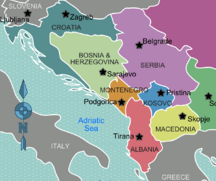 The countries of the region have also small population as Macedonia (2,091,719) , Kosovo (1,859,203), Montenegro (650,036), Bosnia & Hercegovina (3,871,643)
and Serbia (7,209,764). Wouldn’t
it be of common interest to buy medicaments together in order to reduce the
price of the medicament? The countries of the region can start a common
agreement to buy the medicaments through joint procurement and to adapt their legislation according to international examples. The common fund
that can be managed by an external agency or an international organization.
There can be mentioned the example of PAHO Revolving Fund where 40 countries of middle America and Caribbean countries buy vaccines together.
The countries of the region have also small population as Macedonia (2,091,719) , Kosovo (1,859,203), Montenegro (650,036), Bosnia & Hercegovina (3,871,643)
and Serbia (7,209,764). Wouldn’t
it be of common interest to buy medicaments together in order to reduce the
price of the medicament? The countries of the region can start a common
agreement to buy the medicaments through joint procurement and to adapt their legislation according to international examples. The common fund
that can be managed by an external agency or an international organization.
There can be mentioned the example of PAHO Revolving Fund where 40 countries of middle America and Caribbean countries buy vaccines together.
The question “Will the transition
ever end?” is often asked among the population which sees the transition period
the country is facing as the main “guilty” of the general situation. Managers
of health system might find solutions like alternative forms of financing
through co-payment, changing the period of times of the tenders or starting to work with other countries of the region in order to built a common fund. In the
same time population should understand that every change needs to take its
time. In order to have an universal health coverage in Spain took approximately 47 years (which changed in 2012 due to economical crisis). Albania has
done a lot of positive change during these years and hopefully in the next
years we will have a better health system.
 |
| Prime Minister of Albania says: - Health system needs a radical change |
Here you can find a chronic of an Spanish TV about the current situation of health system in Albania
One of the biggest problems Albanian Health systems is facing in the lack of medicaments in the hospitals and health centers. In many cases patients need to buy medicaments in the private pharmacies which can be easily located near the public hospitals. In Albania, the distribution of medicaments in the hospitals is done based in the needs of each hospital but the procedure of buying medicaments is undertaken by the Ministry of Health through a public tender. The procedures of this tender each year take a lot of time and occurs that half of the year patients have free access with hospital medicaments and half of the year not. In April 2014, the government changed the procedures for the tender aiming to facilitate the process of buying the medicaments. In the same time the list of medicaments bought by the government was 525 compared with 327 types of medicaments bought by the public system in 2013.(1) This is a very good news but wasn’t it too late in April not to have medicaments still in the hospitals? Under this situation the procedure of Tender can start in December or November of each year in order medicaments can be in the hospitals in January of the next year.
The population andhouse holding census of 2011 in Albania estimated that the population was
2.821.977. If we compare with other countries it is evident that Albania is a
small country. In right proportion the needs for medicaments will be less than
in other countries and the price of the same medicaments will be higher.
Minister of Health gave the concrete example how the same medicament Bortezomib with the name trade Velcade for Albania cost 947 Euro and for Turkey 658 Euro which means 42% less. The same happened also for the medicament Trastuzumab.
E. Tresa


